
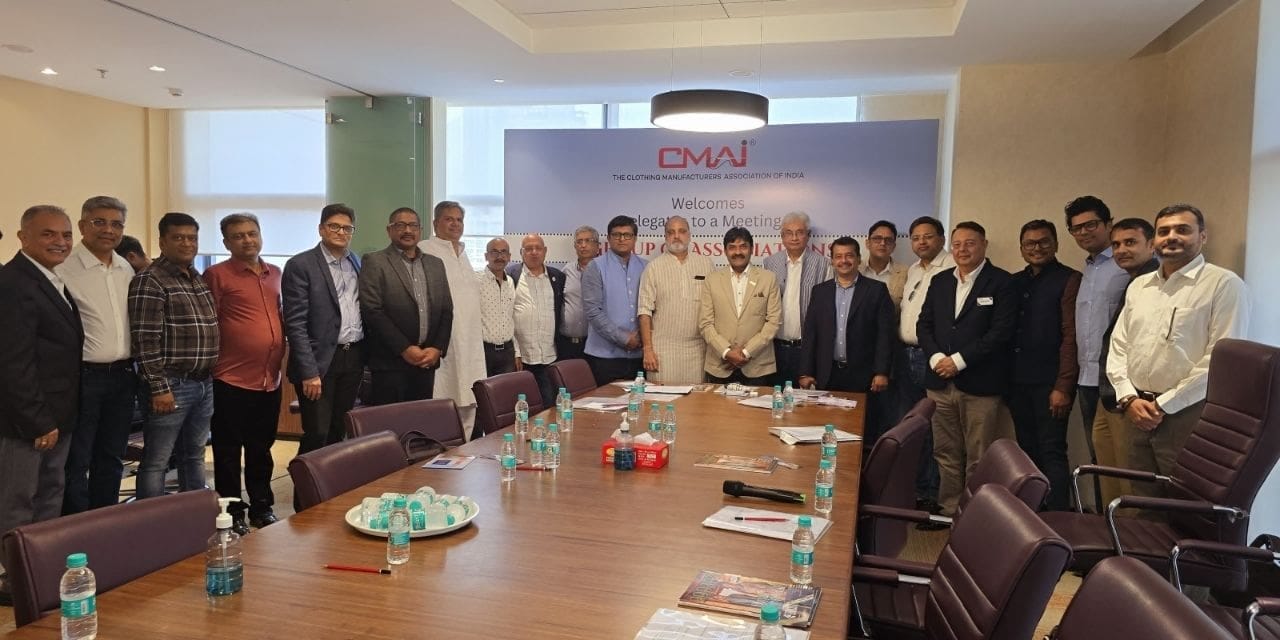
A unanimous resolution was passed by the Clothing Manufacturers Association of India (CMAI) and 14 prominent garment trade associations from all over India as part of ONE INDUSTRY, ONE VOICE, a unique initiative to strengthen the domestic garment industry. The resolution was submitted to the Group of Ministers (GoM) to abandon a proposal to change the GST rates in the garment sector and maintain the current structure of 5% and 12%. Perhaps this is the first time that so many sizable associations from all over the nation have come together to discuss shared programs and issues and to show a unified front to the government. The meeting’s primary goal was to promote a coordinated, group strategy to ensure long-term growth. Important budget suggestions to support the garment trade, promote sustainable growth, and meet pressing sector demands were among the other significant decisions. The following are the five main suggestions. !assets/images/picture-1-cmai-group-of-associations.jpeg “picture-1-cmai-group-of-associations”)
- eliminate this provision or
- extend the rule to the Medium Segment, ensuring equal growth opportunities, or
- introduce a gradual reduction of the payment period: 90 days in Y1, 60 days in Y2, and 45 days in Y3.
“We are happy that all the leading associations have come together under Group of Associations to address these concerns and create a unified voice for the industry,” said Santosh Katariya, President of the Clothing Manufacturers Association of India (CMAI), in a statement following the meeting. As CMAI, we are dedicated to providing the government with thorough suggestions on important issues including GST, supply chain disruptions, rising input costs, and the necessity of policy reforms. These are necessary to guarantee the apparel industry’s long-term expansion and viability. Rahul Mehta, Chief Mentor, Clothing Manufacturers Association of India (CMAI) stated, “Even though consumer attitude is changing, it is important to understand that the industry will still face difficulties if prompt policy changes are not made. Policies that support the apparel industry’s expansion and guarantee a well-rounded strategy that promotes both short-term stability and long-term sustainability are necessary. Unlocking the sector’s full potential and converting favorable consumer trends into observable, long-term industry growth would require a supporting legislative framework. The Garment Exporters Association of Rajasthan (GEAR) in Jaipur, the Bangalore Apparel Manufacturers Association (BAMA) in Bengaluru, the South India Garment Association (SIGA) in Bengaluru, the Knitwear & Apparel Manufacturers Association of Ludhiana (KAMAL) in Ludhiana, the Woolen Garment Manufacturers Association in Ludhiana, the Tirupur Exporters Association (TEA) in Tirupur, the Federation of Surat Textile Traders Association (FOSTTA) in Surat, GVS in Surat, the Indore Readymade Vastra Vyapari Sangh (IRVVS) in Madhya Pradesh, the Gujarat Garment Manufacturing Association (GGMA) in Ahmedabad, the Sholapur Garment Manufacturers Association (SGMA) in Maharashtra, and the Noida Apparel Exporters Cluster (NAEC) in Noida, Uttar Pradesh, were among the other prominent garment and textile trade associations that took part. With a strong retail market size of INR 5.4 lakh crore, the clothing sector is a vital component of the Indian economy. In addition to its economic importance, the industry contributes significantly to employment, supporting the livelihoods of some 39 million people, including 16 million blue-collar jobs in domestic manufacturing. Even while the sector has shown remarkable endurance and growth, there is still a great deal of room for even more success. Through the implementation of focused assistance and projects, the industry can open up new avenues for long-term stability and sustainable growth.
Established sixty-one years ago, The Clothing Manufacturers Association of India (CMAI) is the most representative association of the Indian apparel industry having over 5000 members and serving more than 35,000 Retailers across India. Its Membership consists of Manufacturers, Exporters, Brands, and ancillary industry. CMAI has contributed immensely towards development of the industry. It acts as a catalyst of Change, Evolution, and Transformation by regular interactions with the Government to encourage industry-friendly policies on one hand, and with the Members to keep pace with the dynamics of market forces on the other. CMAI has been responsible for influencing several measures in policies of the Government including GST, PLI, Duty Drawback, Export Promotion Schemes, FTAs, etc. It is also playing a vital role in pushing the industry into a more ESG and Sustainability oriented working.