
Safety First: Enhancing Industrial Peace Through Occupational Safety & Health Systems
By
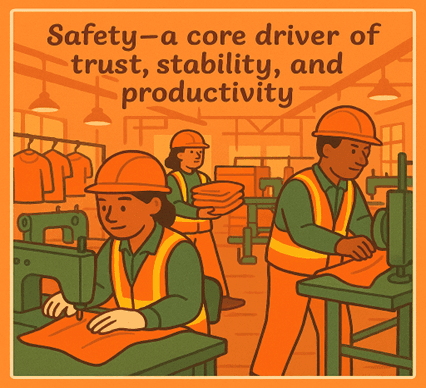
Share In the Bangladesh RMG industry, safety is not just a compliance issue—it’s a core driver of trust, stability, and productivity. From Rana Plaza to today, the sector has evolved significantly in its safety commitments. Yet, to truly sustain industrial peace, occupational safety and health (OSH) systems must be deeply embedded—not just on paper, but in practice, culture, and accountability. Why OSH Is Critical to Industrial Harmony Unsafe workplaces not only endanger lives but also disrupt operations, erode worker confidence, and damage the sector’s global image. Conversely, safe factories are more productive, retain skilled workers, and attract better buyers. The International Labour Organization (ILO) recognizes OSH as a fundamental principle and right at work, and in 2024, urged Bangladesh to reform and modernize its national OSH framework to reduce industrial tensions and ensure long-term compliance. Progress Since 2013: Key Achievements in Workplace Safety The Rana Plaza collapse in 2013, which claimed over 1,100 lives, catalyzed a historic transformation in Bangladesh’s Ready-Made Garment (RMG) sector. Since then, coordinated efforts by national and international stakeholders have led to significant improvements in safety, transparency, and worker well-being. Milestone Initiatives & Their Impact- | Accord & Alliance (2013–2018) | Over 2,000 factories inspected; 92% of safety issues remediated | |