
Experts called Bangladesh to prepare for EU’s digital product passport policy
By
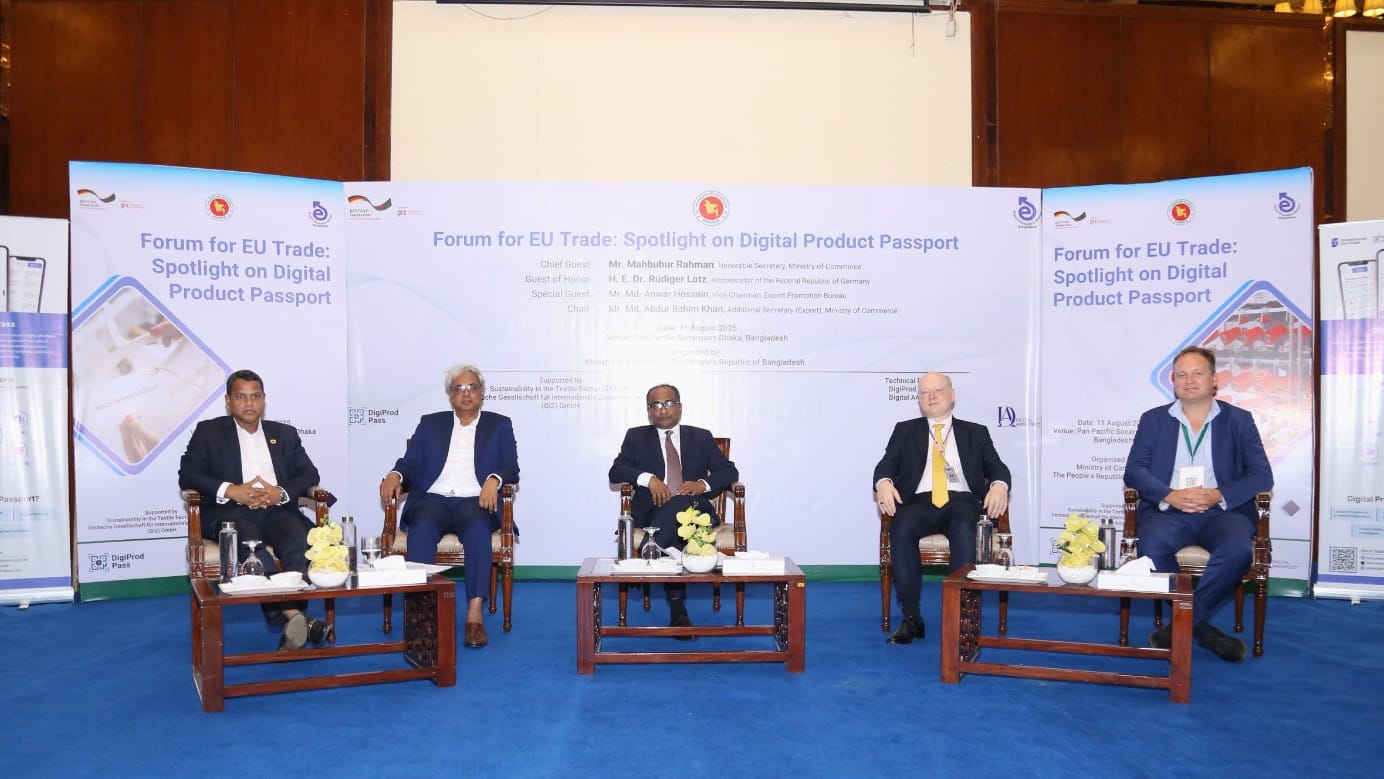
Share A day-long seminar titled “EU Trade Forum: Spotlight on the Digital Product Passport” was recently held at the Pan Pacific Sonargaon Hotel in Dhaka to familiarize Bangladesh’s export-oriented industries with the European Union’s (EU) new policy initiative—the Digital Product Passport (DPP). The event was jointly organized by the Ministry of Commerce and the German Development Agency GIZ, aiming to create a shared understanding of the DPP and assess Bangladesh’s preparedness to align its export sectors with the EU’s Ecodesign for Sustainable Products Regulation (ESPR). At the seminar, chief guest Mahbubur Rahman, Commerce Secretary, said: “This type of technology-driven event has been organized in Bangladesh for the first time.” He further stated that when implementing regulations like DPP, it is crucial to ensure that costs do not increase excessively. Additional commerce secretary Md Abdur Rahim Khan chaired the session. Among the special guests was Rüdiger Lotz, ambassador of Germany to Bangladesh, who stated: “DPP is an important tool for maintaining the traceability and transparency of a product.” Md Anwar Hossain, vice-chairman of the Export Promotion Bureau, said: “We want to develop a data ecosystem for DPP that will remain under the ownership of the government, from which exporters, factory owners, and other private sector entities will be able to benefit.” The main objective of the event was to provide insights into the EU’s requirements for traceability and a circular economy. Experts discussed the technical structure of the DPP and how it can ensure traceability across the entire supply chain—from the raw materials used in production to the final product. They came from various sectors, including apparel, food, pharmaceuticals, and batteries, shared their practical experiences and challenges at the seminar. Organizers believe the seminar served as a crucial platform for policymakers, industry leaders, and technology innovators in Bangladesh, helping the country’s export industries prepare to meet the EU’s future sustainability standards. Share Previous article #
Simillar News