
Batik Beyond Borders: Craft, Community, and Eco-Fashion in Bangladesh
By
Share Professor Nusrat Jahan Nipa, Department of Design, Zhejiang Modern Agriculture College, China & Founder, Heritage Research and Professional Institute (HRPI) Batik is one of Bangladesh’s most cherished traditional crafts, rich in culture and community history. In recent years, it has been reimagined not just as a fashion product, but as a tool for social business, sustainable design, and women’s economic empowerment. With the global rise of eco-friendly fashion, Bangladesh’s handmade batik holds tremendous potential. Photo: Batik Print Types of Bangladeshi Batik In Bangladesh, three primary types of batik methods are practiced:
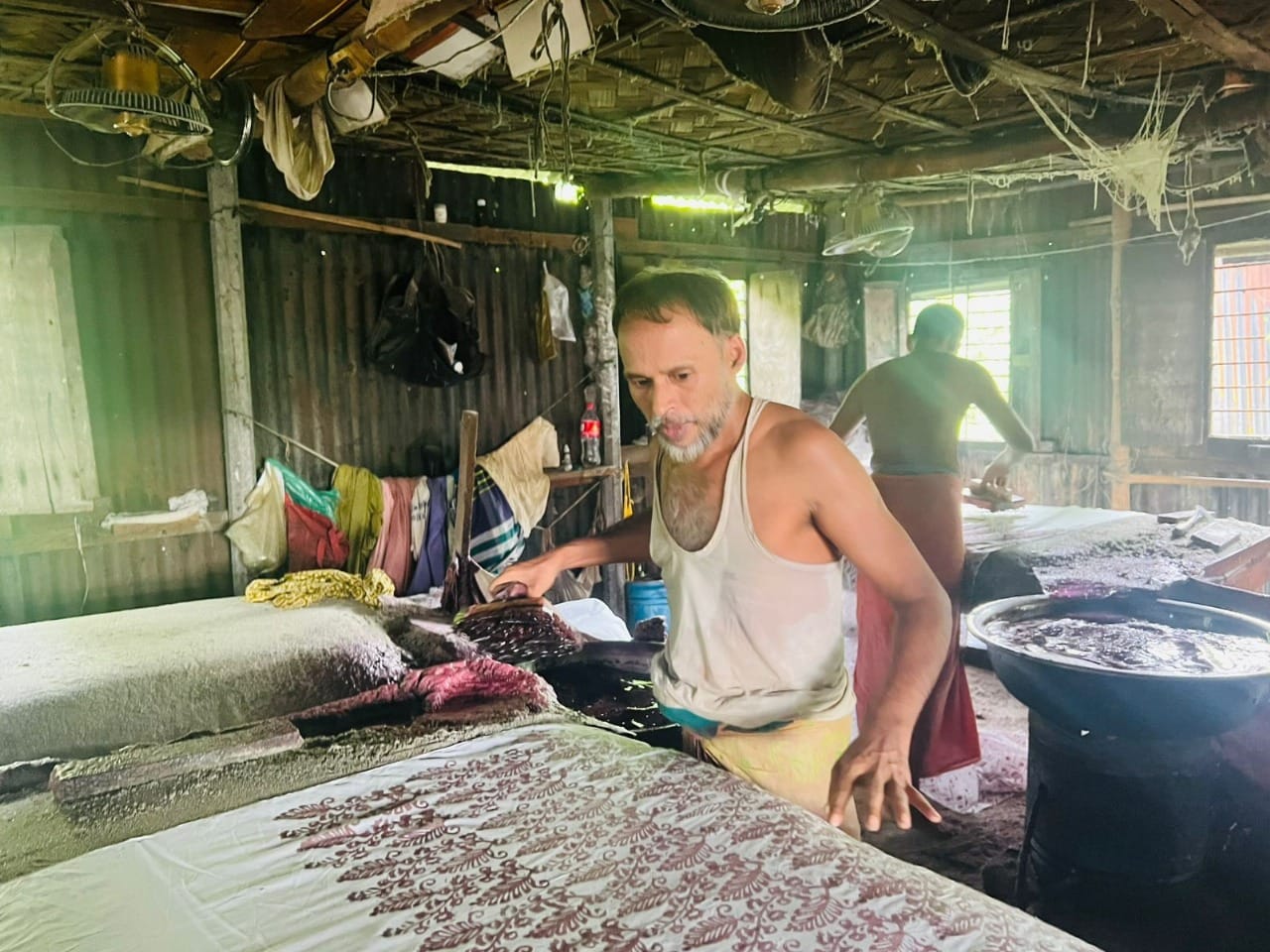
All three types are used in saris, scarves, shawls, home décor, and fashion accessories. Photo: Batik Print Process Batik Making Process The traditional batik process follows these key steps:
This hands-on process ensures every batik piece is unique. Costing and Profit Margin Here is a sample cost breakdown for a single batik scarf or sari: Natural Dyes and the Future of Eco-Fashion Natural dyeing is gaining global popularity for its sustainability and skin-friendly appeal. In Bangladesh, traditional dyes made from indigo, marigold petals, guava leaves, haritaki, henna, and tree bark are being used to replace harmful chemical dyes. Batik made with natural dyes appeals to environmentally conscious consumers in markets like Japan, Germany, Canada, and the Netherlands, making it a future-ready product for ethical fashion. Photo: Social Business and empowerment Social Business and Women Empowerment Batik is now being used as a social business model to uplift rural and marginalized communities, particularly women and youth. Key features of this model include:
This approach creates self-reliance, dignity, and sustainable livelihoods. Institutional & International Collaboration Partnerships between NGOs, design institutions, and international universities are opening up new doors through:
Such collaborations position Bangladeshi batik on the global stage. Batik is more than just fabric; it is a cultural statement, a business opportunity, and a social movement. With innovation, training, and support, the Bangladeshi batik industry can become a global symbol of sustainable craft, women’s empowerment, and creative heritage. #
Simillar News