
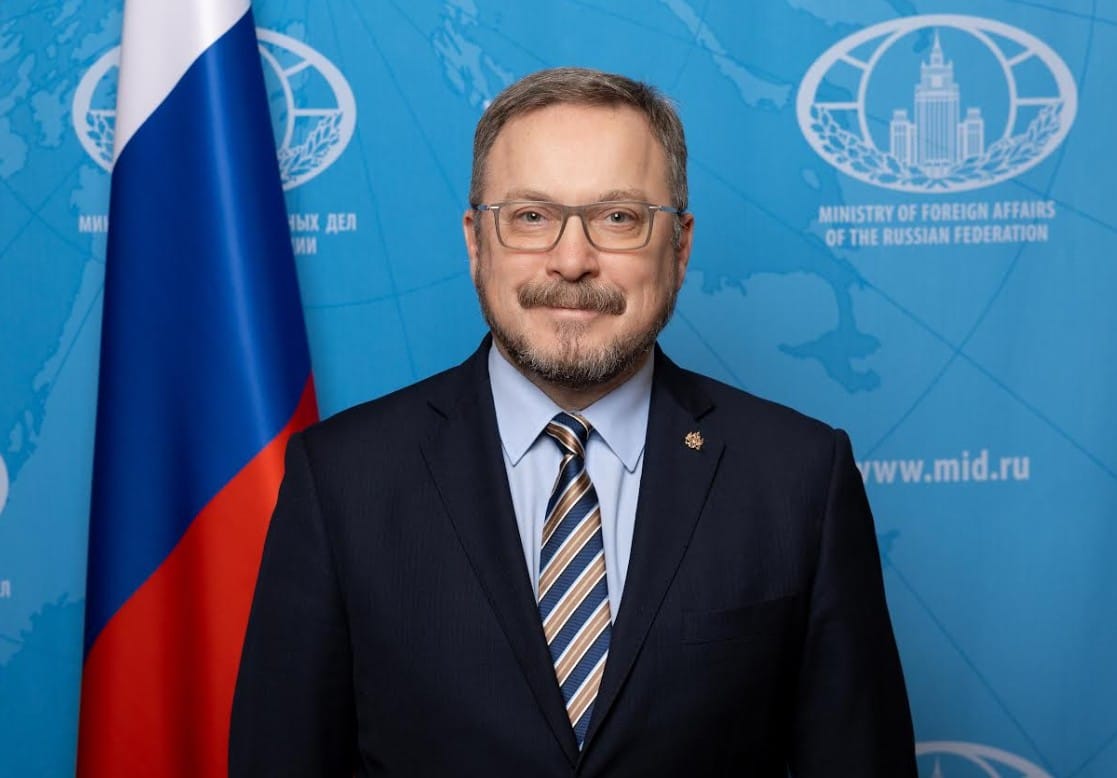
Bangladesh is Russia’s second largest trade partner in South Asia- H.E. Mr. Alexander G. Khozin
By
Share In 2024, despite existing global hindrances, the turnover exceeded $ 2 billion. The lion’s share of what Bangladesh exports to Russia is ready-made garments. The Ambassador of the Russian Federation to Bangladesh, H.E. Mr. Alexander G. Khozin, in an exclusive interview with Textile Focus. Read the full conversation.
Textile Focus: How do you see the economic growth of Bangladesh?
Ambassador: The economy of Bangladesh has been robustly advancing over the last decades, with the national GDP growth consistently surpassing the global average. The country has swiftly recovered from the COVID-19 pandemic and effectively navigates through geopolitical challenges. This positive trend is even more impressive amid artificial hurdles created by the Western countries to the development of the Global South countries. These neocolonial tools include unilateral unlawful sanctions, conditional access to their markets, exorbitant tariffs, and unchecked pressure of transnational corporations.
The textile and apparel sectors have always been driving Bangladesh’s economic growth. They make up more than 80% of the country’s total export, create jobs for millions and attract foreign investments. In 2024, Bangladesh once again secured its status as the second largest apparel exporter in the world. “Made in Bangladesh” label is globally acknowledged for the perfect balance between high quality and affordable price.
Textile Focus: How can Bangladesh export more to Russia?
Ambassador: Bangladesh is Russia’s second largest trade partner in South Asia. In 2024, despite the existing global hindrances, the turnover exceeded 2 billion US dollars. The lion’s share of what Bangladesh exports to Russia is ready-made garments.
Today the Russian textile and light industry market is estimated at almost 80 billion dollars. It is large, diverse and capacious, with Russian manufacturers occupying only about one fourth of it. With the withdrawal of a number of foreign brands from the Russian market, additional opportunities for cooperation have opened up, such as joint projects for localizing garment production and developing contract manufacturing.
Since direct B2B contracts and supplies dominate this field, the Bangladesh business community may be advised to keep an eye on the specialized international exhibitions and fairs held in Russia every year. To name a few, Textilelegprom, Textile Salon, INTERFABRIC, RFT EXPO, Child and Junior Fashion Salon. I believe that participation of interested Bangladeshi manufacturers in the said events will be instrumental for boosting textile and apparel export.
Textile Focus: How can the Embassy help in export diversification?
Ambassador: Apart from RMG, Bangladesh can offer Russian consumers a wide range of agricultural products such as rice, tea, spices, fruits, vegetables, seafood, as well as pharmaceuticals, jute and leather products. The representatives of the Embassy regularly meet Bangladeshi businesspeople interested in exploring the Russian market and advise them on the process. However, trade diversification is a two-way street. Its huge untapped potential should be unlocked jointly.
Textile Focus: How many development projects are going between Russia and Bangladesh, including the Textile Sector?
Ambassador: Energy cooperation has always been the backbone of our economic relations. Our major development project is the construction of Bangladesh’s first nuclear energy facility – Rooppur nuclear power plant. Russia’s “Rosatom” State Corporation and its engineering division ASE are implementing the project. The NPP will contribute to the stability of national energy security, providing additional 2,400 MW to the grid. Nuclear power is low cost and environmentally friendly since NPPs produce nearly zero carbon dioxide or other greenhouse gas emissions.
Another field of our bilateral cooperation is gas production. Since 2012, Russian company “Gazprom International” has designed and built about 20 appraisal, exploration and production wells in Bangladesh, specifically on Bhola island. A significant amount of natural gas has been discovered there. Gazprom is interested in continuing its operations in Bangladesh under the Memorandum of Understanding earlier signed with BAPEX. Apart from drilling, the company is ready to participate in seismic survey and gas transportation projects.
Speaking about the textile sector, with less Western companies on the Russian market, our businessmen are reorienting towards new suppliers, including those from Bangladesh. Investments here can amount to billions of dollars. Creating joint ventures can leverage the strengths of both countries in terms of technology, expertise and market access.
Textile Focus: What are the challenges in the bilateral trade?
Ambassador: In 2021, Russia-Bangladesh trade volume reached an all-time height of almost 3 billion USD. The decrease we have been witnessing over the last years has been largely caused by global economic hindrances emanating from the collective West.
The illegal unilateral sanctions imposed on Russia by the US and its satellites disrupted production and supply chains. A number of Russian banks came under financial restrictions and were disconnected from SWIFT. Sovereign governments, willing to conduct trade with Russia, are blackmailed with secondary sanctions, enterprises – with liabilities, up to criminal ones, for non-compliance with the sanctions regime. All of it affects our trade with foreign partners.
Still, both governments and companies of our two countries are adjusting to the new reality. The exploration of new logistics routes is underway. The competent agencies elaborate on secure payment modalities to evade transactions in US dollars and euro. In this context, a branch of a Russian bank in Bangladesh would remove transaction complications for both sides.
#
Simillar News